KEY FACTORS AFFECTING DOMESTIC TRANSPORTATION COSTS
Transportation costs are always a top concern for manufacturing companies and logistics service providers. However, not every business has sufficient information and experience to accurately assess the components that form domestic freight rates. Let’s explore with Nhat Long Logistics the key factors influencing domestic transportation costs in the article below.

Type of Cargo
Cargo characteristics are the first and most critical factor in calculating transportation costs. High-value goods typically require more stringent and complex requirements in terms of packaging, handling, transportation, storage conditions, and skilled manpower. As a result, transportation costs tend to increase in proportion to the value of the goods.
In addition, certain types of cargo require special handling conditions – such as temperature-controlled transportation for food and perishables – which further drives up freight rates.
Freight costs also vary depending on shipment volume. Transporting large quantities in a single shipment is generally more cost-effective than shipping smaller quantities across multiple trips. Depending on each business’s operational stage and strategy, companies should plan shipment volumes appropriately to optimize transportation costs.
Fuel Costs and Additional Surcharges
- Fuel costs: Fuel typically accounts for a significant portion (approximately 30 – 40%) of total transportation costs. Fuel prices fluctuate frequently, leading to volatility in freight rates. To mitigate risks, businesses are advised to work with reputable and experienced logistics providers, as they often factor fuel price fluctuations into their initial quotations –helping avoid sudden price increases or service disruptions when fuel prices rise.
- Surcharges: During transportation, additional costs may arise due to regulatory requirements or service-related charges imposed by authorities or logistics providers. These may include road tolls, loading and unloading fees, transshipment fees, additional delivery point charges, waiting time fees, and overtime charges. Generally, such fees follow standardized frameworks and remain relatively stable. Businesses can request detailed surcharge lists from logistics providers to better manage costs.
Transportation Infrastructure
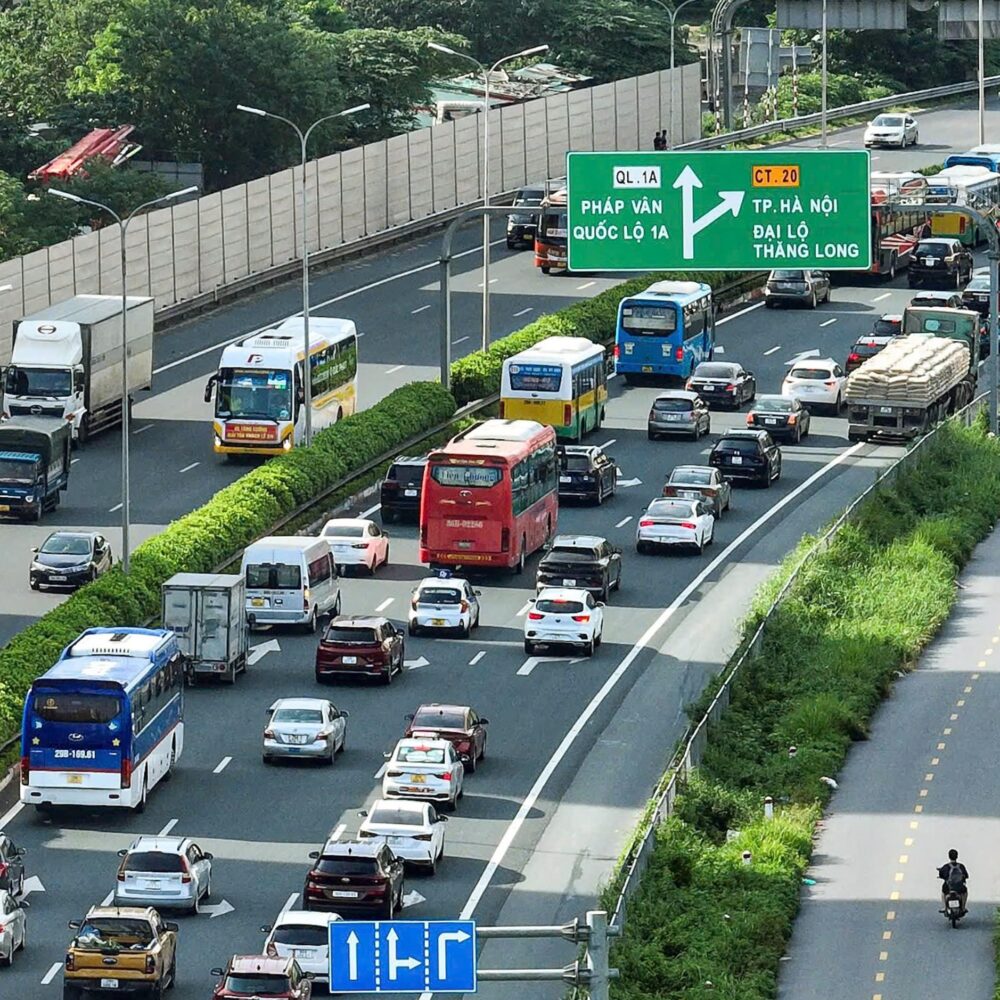
The quality of transportation infrastructure – such as road width, surface condition, safety level, and load-bearing capacity – also has a direct impact on freight rates. Poor road conditions or mountainous routes with challenging terrain can increase fuel consumption and vehicle wear and tear, resulting in higher transportation costs compared to standard routes.
Mode of Transportation
Domestic transportation offers diverse options due to geographical advantages, including road, sea/inland waterway, rail, and air transport:
- Road transportation is the most flexible mode, suitable for a wide range of cargo types, offering reasonable costs and high adaptability with various truck capacities.
- Waterway and rail transportation are ideal for large-volume or heavy cargo (such as steel coils, chemicals, oversized machinery, etc.) with lower costs, though they are less flexible and typically involve longer transit times.
- Air transportation is used for high-value or time-sensitive cargo (such as pharmaceuticals, luxury goods, fresh flowers, etc.) and carries the highest freight rates.
Accordingly, freight costs vary significantly depending on the chosen transportation mode.
Seasonality
Seasonal demand plays a major role in domestic transportation pricing. Peak seasons present significant challenges for both manufacturers and logistics providers. During these periods, freight rates tend to rise due to limited service capacity, vehicle shortages, and congestion at warehouses and distribution hubs. Logistics companies may increase prices to offset higher costs related to equipment, labor, and extended operating hours.
To ensure smooth cargo movement at reasonable costs, businesses should partner with a reliable logistics provider. Established and experienced logistic providers understand cargo characteristics, operate extensive fleets, and maintain broad subcontractor networks – allowing them to deliver high-quality services with stable pricing, even during peak seasons.
With 17 years of continuous growth, Nhat Long Logistics has affirmed its pioneering position in Vietnam’s logistics industry, serving as a strategic partner to numerous businesses both domestically and internationally. The trust placed in us by world-leading electronics and home appliance corporations such as Panasonic, Sony, Mitsubishi, Aqua, Midea, etc. stands as a vivid testament to our brand reputation and our exceptional capability to meet the most rigorous transportation standards.
With a fleet of over 130 modern, fully certified vehicles (ranging from 1.25-ton trucks to 45-foot containers), integrated with comprehensive operational monitoring and smart dispatch systems, Nhat Long Logistics delivers an industry-leading on-time performance rate of up to 99.8% while ensuring outstanding safety and accuracy. Powered by a team of highly experienced dispatchers and drivers – proficient in technology and dedicated to service excellence – we are ready to handle every requirement – from individual shipments to large-scale transportation projects.
Nhat Long Logistics is where businesses find the perfect harmony of speed, safety, and reliability – turning each delivery into not just a logistics service, but a lasting commitment of value.
Contact us today:
📞 +84 923 739 888
📩 info@nhatlongtrans.vn